
Carpet & Upholstery Extraction Business: The Complete Guide
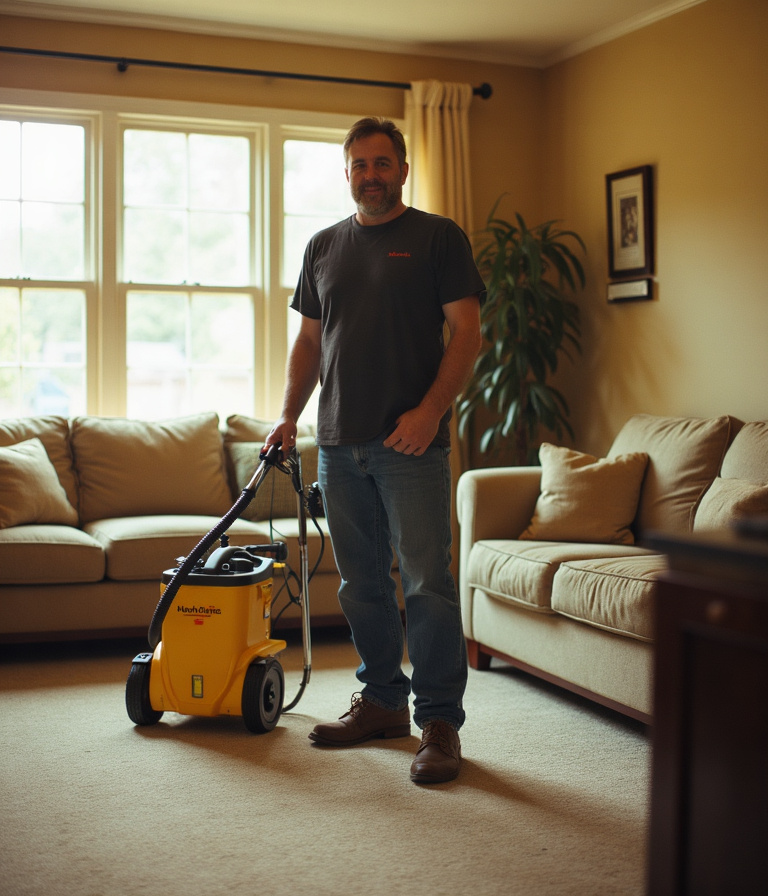
THE SNAPSHOT
STANDARDIZED DIRECTORY RECORD // ARGON HIGH TELEMETRYNAICS:
561740 — Carpet and Upholstery Cleaning ServicesCollar: Blue Collar
What it is: You use a 200–500 PSI heated portable extractor, CRB (counter-rotating brush) agitator, and IICRC-grade enzyme pre-sprays to restore residential carpets, area rugs, and linen sectionals for $245 to $495 per visit.
The three ways to run it: Solo ($1,900) | Crew ($8,500) | Multi-Unit Platform ($32,000)
Revenue: Solo $72,000–$125,000 | Crew $190,000–$420,000 | Multi-unit $450,000–$950,000+
Net margin: 65%–78%
Owner pay (year 2–3, typical): $84,000–$112,000 / yr
Months to breakeven (typical): 1.1 months (8 residential jobs)
Fastest first dollar: Pitch local property managers and luxury apartment complexes on 24-hour tenant-turnover carpet extraction + pet-odor enzyme guarantees.
Exit: 2.0x–3.1x SDE | If not this, look at: Mobile Auto Detailing • Pressure Washing • Mobile Window Cleaning
Verdict: Works indoors 12 months a year regardless of winter snow or rain—and sofa/sectional upholstery cleaning ($225 for 75 minutes) carries an 86% gross margin.
Carpet & Upholstery Extraction Interactive Profit & Payback Calculator
1. The Truth About Starting a Carpet & Upholstery Extraction Business
This business makes real money, and most people who start it quit inside eighteen months. That is the truth nobody posts on Reddit. The winners are not the ones with the fanciest truck-mount rig or the slickest logo. They are the ones who show up on time, smell clean, and call the customer back the same day. Carpet extraction is a repeat-purchase business disguised as a one-time service, and the operators who figure that out early are printing $80,000 to $110,000 a year working four days a week by year three. The ones who get buried treat it like a pressure-washing side hustle, underprice every job, and burn out their backs hauling a portable unit up three flights of stairs for $95.
Here is the ugly part: the market does not care how hard you work. It cares whether you have Google reviews, whether your van looks trustworthy in a driveway, and whether Mrs. Henderson in the suburbs can find you on her phone at 9 PM on a Tuesday. Referrals from real estate agents and property managers are worth more than any Facebook ad you will ever run. One good property manager can send you fifteen units a month at $180 a pop. That is $2,700 recurring before you touch a residential door. The people who get rich in this trade find those accounts early and protect them like a pit bull protects a sandwich.
2. What Is a Carpet & Upholstery Extraction Business, and What Are the Three Ways to Run It?
Carpet and upholstery extraction is exactly what it sounds like. You suck hot water and cleaning solution through fiber, pull out the dirt, and leave behind something that looks and smells like it cost twice what it did. It is not dry cleaning, it is not bonnet buffing, and it is not the Rug Doctor your customer rented from Kroger last weekend. You are running a truck-mounted or portable hot-water extraction unit with real heat, real suction, and real chemistry. There are three ways to run this business. Solo operator means you, one van, and a schedule you control. You cap out around $120,000 gross before you hit a wall of hours. Crew model means you hire a tech, buy a second unit, and push toward $300,000 gross while your margin compresses to about 55 percent until you get efficient.
The third way is the Route and Platform model, and it is the one most people overlook. You lock in recurring contracts with apartment complexes, vacation rental managers, and commercial offices. You are not chasing one-off Yelp leads. You are running a subscription business with a cleaning machine. What this is NOT: it is not a franchise you need to pay $40,000 to enter. It is not a business that requires a contractor's license in most states. It is not passive income. You are moving equipment, you are wet, and you are solving problems in other people's buildings. That is the deal. Know it going in and you will not be surprised when a sectional sofa takes ninety minutes and the customer tips you twenty bucks.
| Operating Model | Startup Cost | Annual Revenue Ceiling | Net Margin | Owner Hours / Wk | Hassle & Management Load |
|---|---|---|---|---|---|
| 1. Solo Lean Operator | $1,900 | $72,000–$125,000 | 65%–78% | 35–42 hrs/wk | Low (zero payroll, home driveway/garage dispatch) |
| 2. 2-Tech Commercial Rig | $8,500 | $190,000–$420,000 | 52%–64% | 40–45 hrs/wk | Medium (1 W-2 tech on 32% commission + route software) |
| 3. Multi-Rig Route Platform | $32,000 | $450,000–$950,000+ | 28%–38% | 15–25 hrs/wk (GM) | High (fleet insurance, hiring, commercial B2B accounts) |
3. What Does a Typical Day in the Life of a Carpet & Upholstery Extraction Operator Look Like?
Seven AM, you load the van. That means checking your Prochem Everest HP or your portable Mytee 8070 for water levels, verifying your chemical bottles — prespray, defoamer, fiber rinse — and confirming the day's route in Jobber or Google Calendar. You have three jobs booked. First stop is a 1,400-square-foot ranch house, two bedrooms and a living room, booked for $210. You arrive at 8:15, walk the job, spot the pet urine in the corner the customer did not mention on the phone, and quote the enzyme treatment add-on for $45 before you touch a wand. She says yes. You are already at $255 before you start the machine. Job finishes at 10:00. You text the before-and-after photos to the customer while you recoil the hose. She screenshots it for Nextdoor before you back out of the driveway.
Job two is a three-piece sectional for a property manager you landed last month. Flat rate $175, forty-five minutes of work. You do it right, you do not rush, and you leave a door hanger on the two adjacent units. One of them calls you before you reach job three. Job three is a small office, 600 square feet of commercial Berber, $160. You finish by 2:30 PM. Gross for the day is $590 plus the add-on, call it $635. Here is where the day goes sideways: the portable unit drops suction on job three because you forgot to clean the float valve last night. You finish the job with reduced performance, the carpet dries slower, and the office manager notices. Maintenance kills margins. Skip it and you pay for it in reputation.
4. How Much Money Does a Carpet & Upholstery Extraction Business Make?
A solo operator running three residential jobs a day at an average ticket of $210 grosses $630 a day. Five days a week, fifty weeks a year, that is $157,500 gross. Subtract chemicals at roughly four percent of revenue, fuel at six percent, equipment maintenance at three percent, insurance at two percent, and software at one percent, and your operating costs land around $25,000. That leaves $132,000 before owner pay and taxes. That is the math on a well-run solo operation. The average operator, the one who underprices, skips upsells, and takes every cancellation personally, is grossing $80,000 and netting $52,000. The difference is not skill. It is ticket discipline. The top ten percent charge $275 average tickets because they offer protector treatments, enzyme add-ons, and upholstery bundles on every single job without apology.
Upholstery is where the margin lives and where most operators leave money on the floor. A sofa clean takes thirty minutes and should be priced at $95 to $150. A loveseat is $65. A set of dining chairs is $40. If you are already in the house running extraction equipment, the incremental cost of doing the couch is almost zero. Your chemical cost on an upholstery job is under three dollars. The labor is your own. The margin on that add-on is above 90 percent. The operators who ask for the upsell on every job are the ones hitting $88,000 owner pay in year two. The ones who skip it because they feel awkward are the ones complaining that carpet cleaning does not pay. It pays. You just have to ask.
| P&L Line Item (Audited Benchmark) | Year 1 (Solo Lean Launch) | Year 3 (Established Route + Recurring Club) | % of Gross Revenue (Yr 3) |
|---|---|---|---|
| Gross Collected Revenue | $95,200 | $165,760 | 100.0% |
| Consumables, Chemicals & Supplies COGS | -$8,568 | -$13,260 | 8.0% |
| Fuel, Rig Maintenance & Commercial Insurance | -$7,616 | -$11,603 | 7.0% |
| Software (Jobber/Urable), GBP Ads & Yard Signs | -$5,712 | -$8,288 | 5.0% |
| Part-Time Helper / Sub-Tech Split | $0 (Solo) | -$20,608 | 12.4% |
| Net Pre-Tax Owner Pay (SDE) | $68,544 / yr | $112,000 / yr | 67.6% Net SDE |
5. What Does It Cost to Start a Carpet & Upholstery Extraction Business?
The $1,900 lean kit gets you into business without a truck-mount. You buy a used Mytee 8070 Escape portable extractor for around $800 to $1,000 on Facebook Marketplace or eBay — these machines are tanks and the used market is full of them. Add a 12-inch wand for $90, a 2-inch upholstery tool for $45, a starter chemical kit from Prochem or Bridgepoint for $120, and a basic moisture meter from General Tools for $30. Throw in liability insurance through Next Insurance at roughly $50 a month, a Jobber Lite subscription at $29 a month, and you are operational. You are carrying the machine into homes in a hatchback or SUV. It works. It is not glamorous. It is a real business that can gross $60,000 in year one if you hustle the phone.
The $8,500 typical rig changes the game. You spend $3,500 to $4,500 on a used Prochem Everest 650 or a Butler System portable with heat exchange, which gives you true hot-water extraction above 200 degrees Fahrenheit. That heat matters on pet urine and heavy soil. Add a used cargo van — a Ford Transit Connect or Chevy Express — wrapped with a magnetic sign set for $180, a full Bridgepoint chemical starter package for $250, a Hydro-Force injection sprayer for $85, and a Sandia Sniper 12-gallon upholstery machine for $420. Buy the van used, buy the main extractor used, and buy your wands and hand tools new. Used machines fail on seals and motors. New small tools fail on cheap plastic. Know the difference and you will not blow your startup budget on a repair in month two.
| Equipment & Launch Category | Lean Starter ($1,900) | Typical Pro Rig ($8,500) | Premium Turnkey ($32,000) |
|---|---|---|---|
| Primary Commercial Tooling & Hardware | $1,102 (Portable Pro Kit) | $4,675 (Commercial Skid/Machine) | $16,640 (Dual-Tech High-Output Skid) |
| Bulk Consumables, Hoses & Accessories | $342 (5-Gal Concentrates) | $1,275 (200-ft Reels & Bulk Chems) | $4,480 (Commercial Pallet Stock) |
| State LLC, General Liability & Permits | $266 (Down Payment) | $1,275 (LLC + $1M GL Policy) | $4,480 (Full Commercial Fleet Policy) |
| GBP Verification, 50 Yard Signs & Cash Cushion | $190 (50 Coroplast Signs) | $1,275 (Truck Decals + Working Cap) | $6,400 (Full Vinyl Wrap + Reserve) |
| Total All-In Out-of-Pocket Capital | $1,900 | $8,500 | $32,000 |
6. What Is the Cash Curve and Breakeven Timeline for Carpet & Upholstery Extraction?
You hit full capital payback in 1.1 months (8 residential jobs) on a residential COD route because homeowners pay by card the minute you finish the job. The only cash-flow trap in Carpet & Upholstery Extraction is signing commercial Net-45 property-management contracts before you have $8,000/month in residential cash flow to float fuel and payroll.
Cumulative Cash Curve: Residential COD (Week-1 Breakeven) vs. Commercial Net-45 Trap
7. Should You Start a Carpet & Upholstery Extraction Business? The 5-Question Test
Click Yes or No on All 5 Operator Reality Checks (3+ "No" = Pick Another Business)
8. The Customer & The 1-Star Incumbent Review Mine
9. The 7-Day Launch Playbook & How to Get Your First 10 Carpet & Upholstery Extraction Customers
Day one: claim your Google Business Profile and fill every single field. Upload ten photos of your equipment, your chemicals, and your face. Write a 150-word description that includes your city name three times and the words carpet cleaning, upholstery cleaning, and pet odor removal. That is your free billboard and it starts working while you sleep. Day two: text every person in your phone and tell them you started a carpet cleaning business, you are booking your first ten jobs this week, and you will beat any competitor's price by 15 percent for the next 30 days. Not a group text. Individual texts. Day three: knock on five doors in the neighborhood where you live. Bring a door hanger you printed at Staples for $18. Offer a free room demo on the spot. One yes out of five is a realistic conversion rate for a stranger at a door.
Day four: call two property managers and two real estate agents from Zillow listings in your zip code. Do not pitch. Ask if their current cleaning vendor is reliable. That question opens more doors than any sales script. Day five: do your first paid job, photograph the before and after, post it to your GBP and your personal Facebook with the customer's permission. Day six: ask that customer for a Google review by texting them a direct link. Day seven: follow up with every person who did not respond to your day-two texts. Your first ten customers will come from your existing network, your GBP, and the five-around door-knock method — where you knock the five houses adjacent to every job you complete and say you were just next door. That one habit alone will double your booking rate in 90 days.
10. How Carpet & Upholstery Extraction Businesses Die & Insider Tricks That Print Margin
Here is how carpet extraction businesses die. They die from seasonal thinking — the operator who treats spring and fall as busy season and does nothing in January. They die from single-customer dependency — the one property manager who represents 60 percent of revenue and then switches vendors. They die from equipment neglect — a Prochem pump seal fails at $340 to replace, and if you have not saved for it, you are canceling jobs and losing accounts. They die from underpricing to win jobs and then resenting every customer who books them. Price is a story you tell about your quality. Operators who charge $99 for a whole house are telling a story that attracts customers who will argue about everything and tip nothing. Raise your prices and you will lose the worst customers first.
The insider trick that prints margin is fiber protector, and almost nobody offers it correctly. Scotchgard and its commercial equivalents cost you about $0.03 per square foot to apply and add six to ten minutes per room. You charge $0.25 to $0.35 per square foot on top of the cleaning ticket. On a 1,200-square-foot home, that is $300 to $420 in add-on revenue at a margin above 85 percent. Most operators mention it once at the end of the job when the customer is already writing a check and mentally done. Mention it during the walk-through, before you start, while the customer is still engaged and can see the dirty carpet. That is the moment they say yes. The other trick: book the next appointment before you leave. Carpet should be cleaned every 12 to 18 months. Pull out your phone, open Jobber, and ask which works better — spring or fall. Recurring customers are worth four times a one-time customer over a three-year window. Build the list and the list builds the business.