
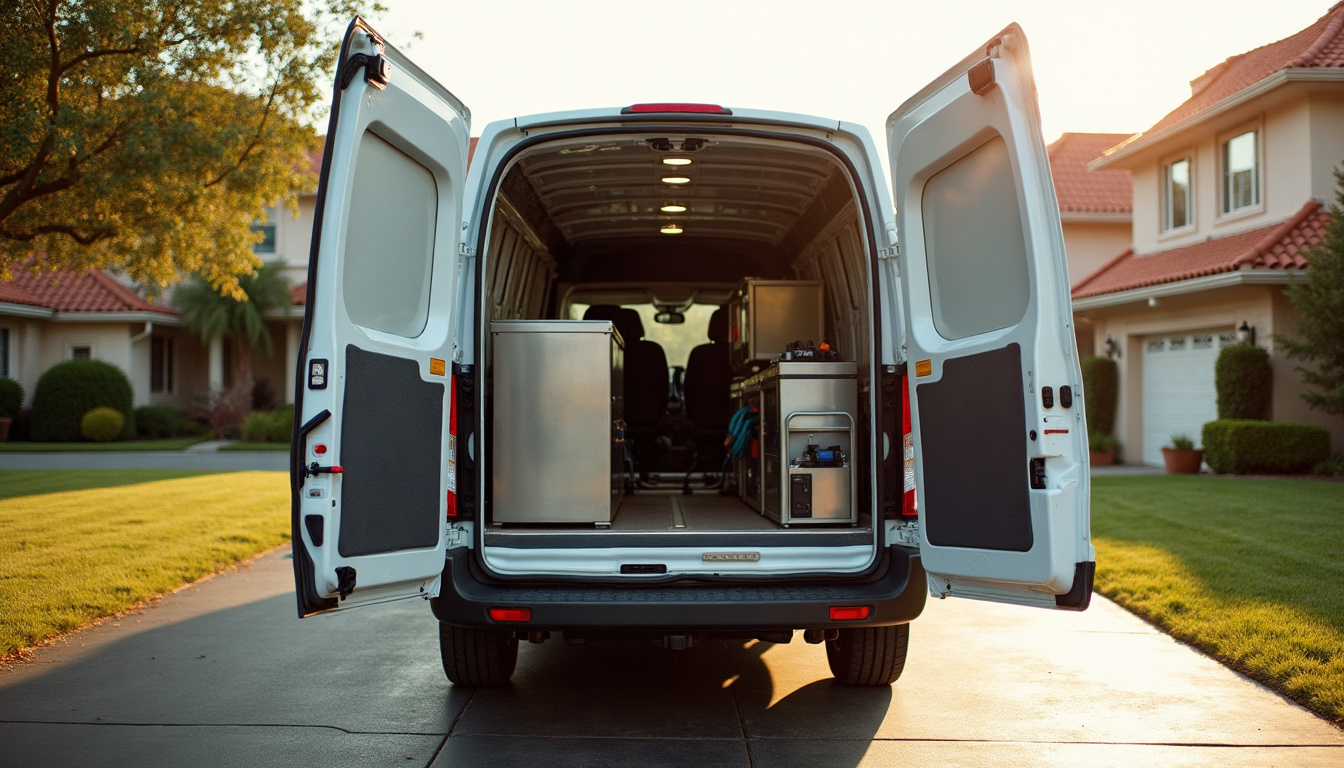
Video Walkthrough: How to Set Up a Mobile Detailing Pressure Washer & Water Tank (Detail Groove)
📄 Read Full Timestamped Video Transcript & Key Moments (GSC Video Indexing Text Layer)
[00:00 — Key Moment 1: The $850 Trunk Kit & Compact Washer Setup] You do not need a $45,000 Sprinter van to make your first $5,000 in mobile detailing. Starting with a compact electric pressure washer (1,800 PSI / 1.2–1.8 GPM), a 4-gallon Ridgid wet/dry vac, and a heated spot extractor lets you run off any residential spigot or compact tank.
[01:45 — Key Moment 2: Plumbing the Water Tank Bulkhead, Ball Valve & Strainer] When transitioning to an onboard water tank in a cargo van or SUV, thread a 3/4-inch bulkhead fitting into the lower outlet, attach an inline mesh strainer so debris never enters your pump head, and run a 3/4-inch braided supply hose to your pressure washer inlet.
[03:30 — Key Moment 3: 5-Gallon Commercial Chemical Dilution & DI Filtration] Pair your water line with a deionized (DI) resin vessel reading 000 ppm on a TDS meter so you can rinse vehicles in direct sunlight without water spots, and dilute commercial concentrates (Pol Star 15:1, Dark Fury 4:1, ONR 256:1) to keep chemical cost under $14 per vehicle.
[05:10 — Key Moment 4: The 28-Day Maintenance Club Handoff] Once the initial 3.5-hour restorative detail is complete, convert the homeowner into a $125/month 28-Day Maintenance Club member on automated billing.
1. The Truth About Starting a Mobile Auto Detailing Business
Most beginners go broke because they chase car count instead of ticket size, and that one mistake turns a real business into a sweaty side hustle that pays worse than a part-time shift at AutoZone. The 90% who quit are out there in Walmart parking lots doing $60 basic washes on beaters, burning four hours of their day, buying water by the gallon, and wondering why they're exhausted and still can't make rent. The 10% who build something real do the opposite. They find the suburban mom with the three-row Tahoe full of Goldfish crackers and dog hair, charge her $285 for a full interior reset, and then sell her a 28-day maintenance club at $125 a month before they back out of her driveway. That's the whole game.
Here's the ugly math nobody posts on YouTube. A detailer running four $60 washes a day, six days a week makes roughly $86,400 gross per year before supplies, fuel, insurance, and the bad back that shows up around month eight. A detailer running two $285 full-detail resets per day, four days a week, with forty recurring club members paying $125 monthly, clears over $94,000 net (est.) by year two — and works fewer hours doing it. The difference is not skill. It is positioning. Charge for transformation, not for time, and this business becomes one of the most capital-efficient service businesses a solo operator can run in America right now.
2. What Is a Mobile Auto Detailing Business, and What Are the Three Ways to Run It?
A mobile auto detailing business is a professional vehicle cleaning and surface-restoration service delivered at the customer's location — their driveway, office parking lot, or apartment complex — using water, chemicals, and equipment you haul in a van or truck. You are not a $12 tunnel wash. You are not a collision shop. You do not fix dents, repaint panels, or swap out trim. What you do, all day, is clean and protect surfaces: paint, leather, fabric, glass, plastic, rubber, and sometimes engine bays. The tools are a pressure washer, a hot-water extractor, a dual-action polisher, a handful of buckets, and a chemistry kit that costs more than most people expect.
There are three ways to run this business, and they are not interchangeable. The first is the Solo Trunk/Van Kit — one person, one vehicle, one skid or trunk setup, targeting residential clients within a tight geographic radius. Low overhead, low volume, high flexibility. The second is the Two-Tech Crew Rig — a cargo van or enclosed trailer with a dedicated freshwater tank, a generator or lithium battery bank, and two operators running four to six jobs a day. This is where the $94,000 net owner pay (est.) lives. The third is the Multi-Van Platform — two or more rigs, a part-time scheduler, and a route structure that starts to look like a franchise whether you want it to or not. Think Spiffy or MobileWash territory, except you own it.
What this business is not is also important to say out loud. It is not passive. It is not scalable on day one. It is not something you can run profitably with a $200 Amazon pressure washer and Dollar Tree soap. The operators who survive year one are the ones who understand that they are selling a premium service to people who value their time and their vehicles, not a commodity wash to people hunting for the cheapest price on Facebook Marketplace.
| Operating Model | Startup Cost | Annual Revenue Ceiling | Net Margin | Owner Hours / Wk | Hassle & Operational Reality |
|---|---|---|---|---|---|
| 1. Solo Operator (Trunk Kit or 1 Van Skid) | $850 – $5,200 (est.) | $68,000 – $118,000 (est.) | 68% – 82% | 32 – 42 hrs | Low hassle. Zero payroll, zero rent. You keep nearly every dollar, but if you take a week off, revenue drops to $0. |
| 2. Multi-Tech Crew + B2B Fleet Rig (2–3 Vans) | $12,500 – $28,000 (est.) | $185,000 – $390,000 (est.) | 34% – 48% | 45 – 55 hrs | Medium-high hassle. Managing $19–$24/hr W-2 techs, workers' comp, quality checklists, and Sunday commercial fleet lots. |
| 3. Platform Subcontractor (Washe / Spiffy / NuWash) | $600 – $1,200 (est.) | $34,000 – $52,000 (est.) | 42% – 50% | 40 – 50 hrs | Worst deal in the trade. The app controls pricing, takes a 28%–35% commission cut, and owns the customer list. |
3. What Does a Typical Day in the Life of a Mobile Detailer Look Like?
The alarm goes off at 6:15 AM. By 6:30 you are filling your 65-gallon poly tank from the house spigot or a commercial water source, diluting your all-purpose cleaner into a labeled spray bottle at a 10:1 ratio, and loading your extractor — probably a Mytee LTD5 or a similar unit — into the van alongside your Ridgid wet-vac, your dual-action polisher, and your chemical caddy. You check the weather app. You check your Jobber schedule. You leave by 7:15 because the 8:00 AM Tahoe appointment is twelve minutes away and the client texted last night warning you about the third row. She was not exaggerating.
The Tahoe is a disaster. Crushed Goldfish, a dried juice spill under the second-row captain's chair, and pet hair embedded so deep in the third-row Velcro that your rubber brush throws a small tantrum. You vacuum first, always. You hit the fabric with enzyme pre-spray and let it dwell while you foam the exterior, rinse, and clay bar the paint. You extract the interior, hit the leather with a pH-neutral cleaner, condition it, dress the plastics, and detail the glass. By 12:00 PM you are loading up. The client comes out, sees the transformation, and you hand her a laminated card explaining your 28-day maintenance club at $125 a month. She signs up on the spot using the Jobber client portal link on her phone.
You eat lunch in the van. At 12:30 PM the neighbor walks over from across the cul-de-sac. This is not an accident — you parked where she could see you work. You quote her a full detail for next Saturday. At 1:30 PM you are at your second job: two identical white Explorers belonging to a couple who both joined your maintenance club last month. These are fast, clean, profitable, and done by 3:45 PM. Then the day goes sideways. Your truck battery is reading 11.8 volts and your inverter throws a fault code. You lose forty minutes troubleshooting. This is why you carry a jump pack and why you build buffer time into every afternoon. By 5:00 PM you are home, rinsing equipment, logging job notes in Jobber, and already at $855 gross for the day.
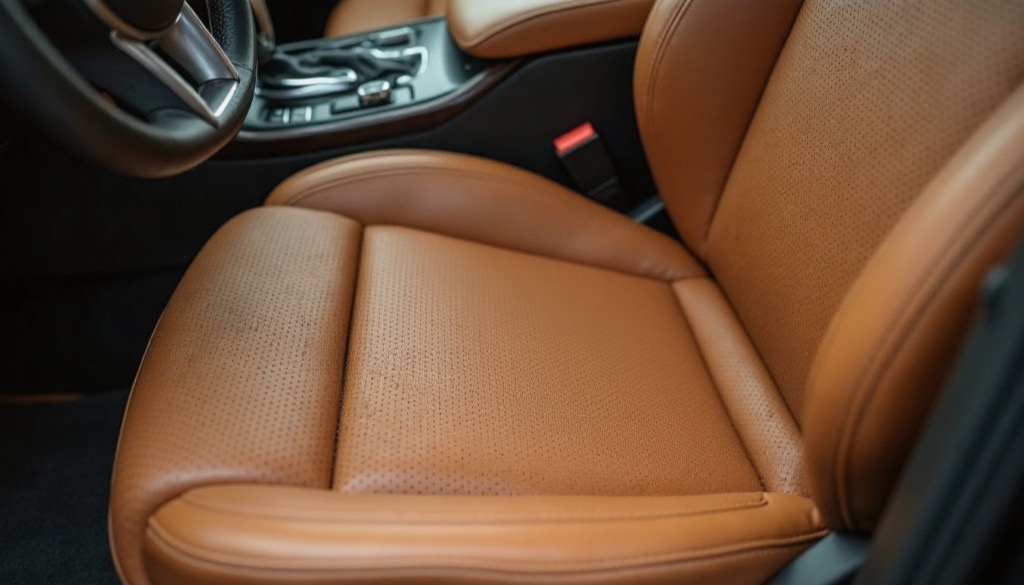
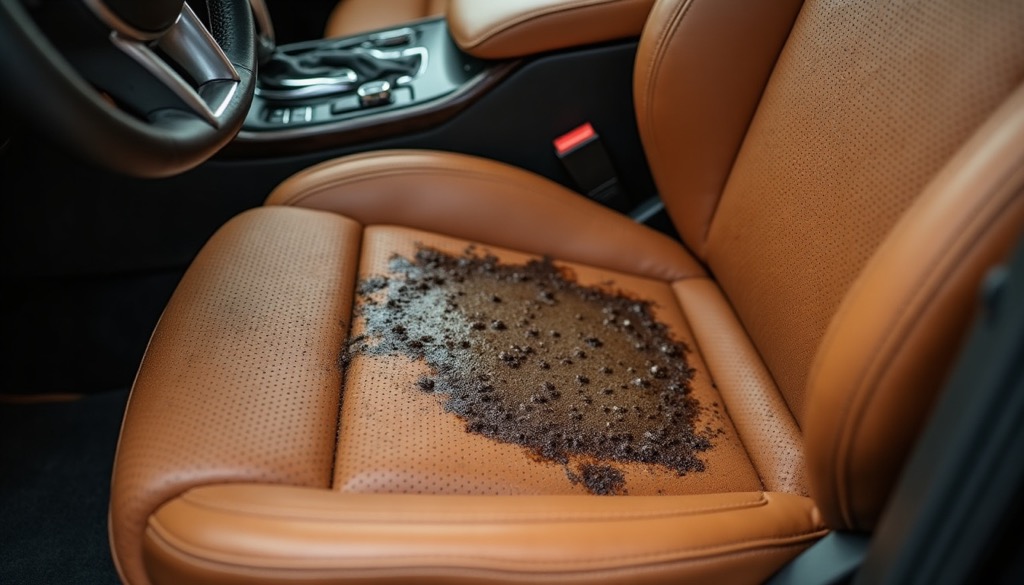
Watch: Extreme Woven Pet-Hair Extraction Protocol (The $65 / 11-Minute Driveway Upsell)
The 3-Tool Electrostatic & Pneumatic Extraction Sequence Shown in This Clip
Labrador, Golden Retriever, and Husky hairs have microscopic barbs that weave into cheap OEM needle-punch SUV cargo felt. A standalone shop-vac—even a 6.5 Peak HP Ridgid—will slide right over barbed hair for 45 minutes while your lower back burns out. Here is the exact 11-minute sequence used by top-decile operators:
seaAMBdlItY): Vertical video demonstrating rubber-blade electrostatic raking and high-CFM vacuum extraction on woven SUV cargo carpet—turning a rookie time-sink into a $65 / 11-minute ($354/hr) driveway add-on.
$5,200 Cargo Van Skid Schematic: 100-Gal Baffled Tank, 3-Way DI Bypass Manifold & High-Pressure Loop
| Plumbing Node | Exact Fitting / Component Part Name | Thread / Hose Spec | Street Price | Why You Need It (Failure Prevention) |
|---|---|---|---|---|
| Node 01 (Tank Exit) | Banjo TF125 Poly Tank Bulkhead + Full-Port Brass Ball Valve | 1-1/4" FNPT → 3/4" MNPT | $34.00 | Lets you shut off 834 lbs of water instantly to clean the strainer without draining the tank |
| Node 02 (Strainer & Pump) | Banjo LS075 50-Mesh Y-Strainer + SHURflo 5.3 GPM 60 PSI Pump | 3/4" FNPT + 3/4" Brass Barbs | $188.00 | Prevents plastic tank shavings from scoring ceramic pressure-washer plungers |
| Valves A & B (Bypass Loop) | 2x Apollo 3/4" Forged Brass Quarter-Turn Ball Valves + 2x Brass Tees | 3/4" Braided PVC (200 PSI) | $62.00 | Isolates expensive DI resin during wheel/foam washing—cuts resin COGS by 87% |
| Node 03 (Deionizer) | CR Spotless DIC-20 Dual 20" Deionizer + Inline Digital TDS Meter | 3/4" GHT / NPT Brass Adapters | $449.00 | Delivers 000 PPM pure water so black SUVs air-dry streak-free in direct summer sun |
| Node 04 (High Pressure) | Coxreels 100-ft 3/8" Steel-Braided Reel + MTM Hydro SGS28 Swivel Gun | 3/8" QC × 4,000 PSI Rated | $365.00 | Live swivel stops hose kinks in driveways; keeps van doors locked and shaded |
4. How Much Money Does a Mobile Auto Detailing Business Make?
The average mobile detailing ticket in 2025 sits at $285 for a full-service SUV or truck (IDA 2025 Operator Survey), and that number is the single most important figure in this business model. Not car count. Not hourly rate. Average ticket. A solo operator running two $285 jobs a day, five days a week, generates $142,500 gross annually before any upsells or recurring revenue. That is a real business. But the operators in the top 10% do not stop there, and the gap between median and top-10% income is almost entirely explained by two things: ceramic coating upsells and recurring maintenance clubs.
A single-stage paint correction plus ceramic coating on a full-size SUV runs $800 to $1,400 (est.) depending on your market and the product you apply — coatings from brands like Koch-Chemie or Gyeon carry enough perceived value to justify premium pricing without a fight. One ceramic job per week adds $40,000 to $70,000 in annual revenue on top of your base detail income. The recurring maintenance club is the other lever. Forty clients paying $125 a month is $5,000 in monthly recurring revenue that hits your account whether you feel like working that week or not. That is the floor, not the ceiling. Operators who stack recurring revenue under their project work stop living job-to-job inside eighteen months.
The Sunday commercial fleet wash is the move that separates the serious from the hobbyist. A small dealership, a landscaping company, or a real estate team with six to ten vehicles will pay $45 to $75 per vehicle (est.) for a weekly wash and interior wipe-down. It is not glamorous work. It is also $450 to $750 for four hours on a Sunday morning when your competitors are sleeping. Top operators run one or two fleet accounts as their financial ballast and use residential detailing for their margin. The math is not complicated. The discipline to execute it consistently is where most people fall short.
| Service / Job Type | Low (Small Town / Entry) | Typical (Suburban Standard) | High (Affluent Metro / 3-Row SUV) | Driveway Hours | Chemical COGS (est.) | Effective Gross / Hr |
|---|---|---|---|---|---|---|
| Interior Disaster Reset (Cabin Only) | $165 | $225 | $295 | 2.5 – 3.25 hrs | $9.40 | $78.00 / hr |
| Full Inside-Out Showroom Reset | $225 | $295 | $385 | 3.5 – 4.25 hrs | $14.20 | $84.50 / hr |
| 28-Day Maintenance Club (Autopay) | $95 / mo | $125 / mo | $165 / mo | 1.0 – 1.25 hrs | $5.10 | $104.00 / hr |
| 1-Step Machine Polish + 3-Yr Ceramic | $550 | $795 | $1,150 | 5.5 – 6.5 hrs | $58.00 | $132.00 / hr |
| B2B Commercial Fleet Wash (6-Van Min) | $42 / van | $55 / van | $75 / van | 25 mins / van | $3.10 / van | $124.00 / hr |
| Add-Ons: Pet Hair / Headlight / Ozone | $45 | $65 | $95 | 20 – 30 mins | $1.80 | $130.00+ / hr |
| P&L Line Item | Year 1: Solo Operator (360 Cars/Yr) | % of Rev | Year 3: 2 Vans + 1 FT & 1 PT Tech (940 Cars/Yr) | % of Rev |
|---|---|---|---|---|
| Gross Service Revenue (Resets + Club + Ceramic) | $93,600 ($260 avg ticket) | 100.0% | $267,900 ($285 blended ticket) | 100.0% |
| Chemical, Microfiber, Pads & DI Resin COGS | -$4,680 ($13.00/car est.) | 5.0% | -$12,860 ($13.68/car bulk est.) | 4.8% |
| Card Processing Fees (Square / Stripe 2.9% + 30¢) | -$2,820 | 3.0% | -$7,770 | 2.9% |
| W-2 Helper Payroll + Payroll Taxes + Workers' Comp | $0 (100% owner-operated) | 0.0% | -$68,400 (1 FT tech @ $22/hr + 1 PT tech) | 25.5% |
| Fuel (Van + Inverter Generator) & Maintenance | -$4,320 ($360/mo est.) | 4.6% | -$11,200 (2 vans + 2 generators) | 4.2% |
| Insurance (CGL + Direct-Primary Garagekeepers + Auto) | -$2,580 ($215/mo combined) | 2.8% | -$6,480 ($540/mo 2-van commercial policy) | 2.4% |
| Software (Urable CRM, QuickBooks, Google Workspace) | -$1,380 ($115/mo) | 1.5% | -$2,640 ($220/mo multi-user) | 1.0% |
| Marketing (Google Local Services Ads + Yard Signs) | -$3,600 ($300/mo) | 3.8% | -$14,400 ($1,200/mo LSA + Meta retargeting) | 5.4% |
| Net Operating Profit / SDE (Owner Pay Pre-Tax) | $74,220 / yr ($6,185 / mo) | 79.3% | $144,150 / yr ($12,012 / mo) | 53.8% |
5. What Does It Cost to Start a Mobile Auto Detailing Business?
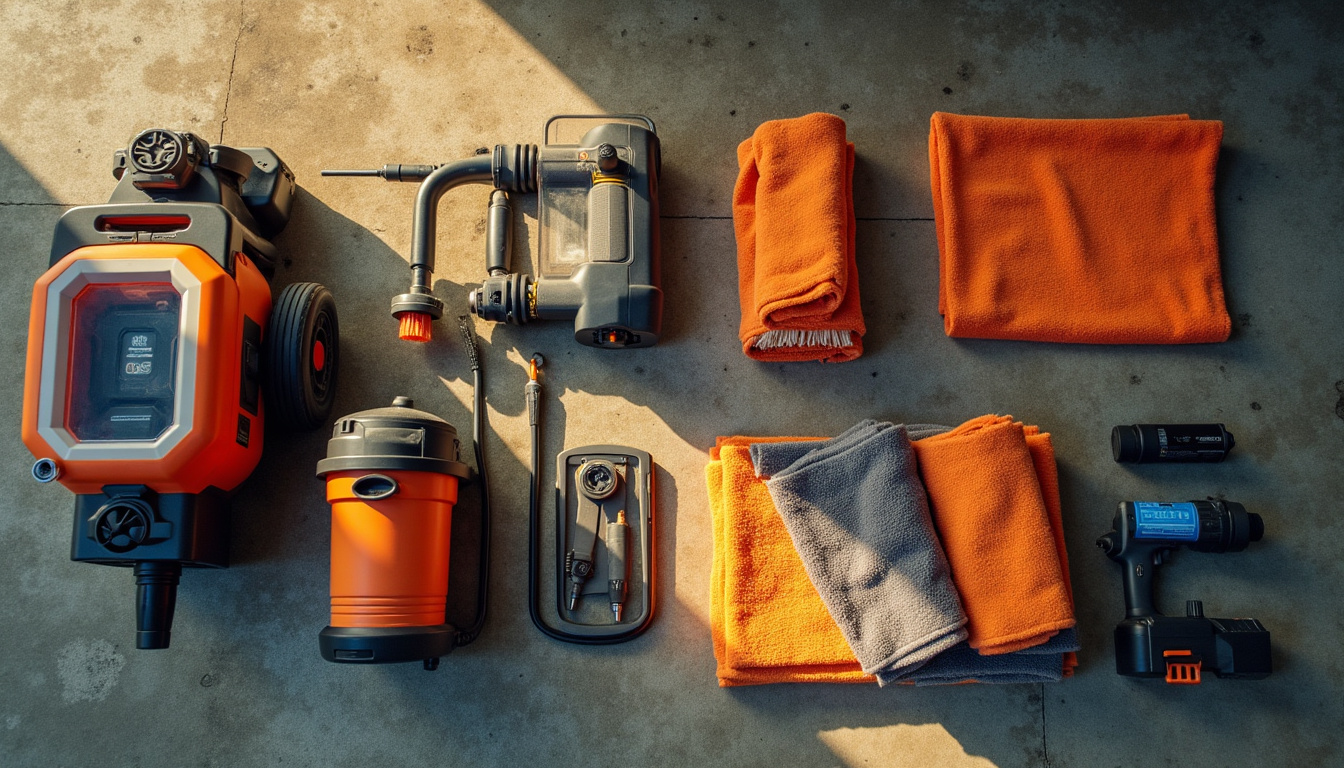
There are three real entry points into this business, and the one you choose should be based on your cash position and your risk tolerance, not on what looks coolest in a YouTube setup video. The $850 Sedan Trunk Kit is a Ryobi 1,800 PSI electric pressure washer, a 6-gallon portable freshwater jug, a Ridgid 4-gallon wet-vac, a five-pack of microfiber towels, and a starter chemical bundle from Chemical Guys or Detail King. It is enough to do exterior washes and basic interior vacuums. It is not enough to do full resets or ceramic work. Use it to get your first ten clients and your first testimonials, then reinvest. The $5,200 Used Cargo Van Skid is where the real business starts: a used Transit or Express van with 80,000 to 120,000 miles, a 65-gallon poly tank, a Mytee or Sandia extractor, a 2,000-watt inverter or a 100Ah lithium battery bank, and a full chemical kit. Buy the van used. Buy the extractor new. The extractor is a precision tool that fails in ways that ruin jobs if it is worn out.
The $18,500 Turnkey Rig is a newer van, a Kranzle or Mi-T-M hot-water pressure washer, a dual-battery lithium system, a full ceramic coating kit, and a wrapped exterior. This is the setup you build toward in year two with profits, not the setup you finance on a credit card in week one. On the chemical side, buy concentrates in 5-gallon jugs from Superior Products or Urable — the per-ounce cost versus quart bottles will shock you once you run the numbers.
Now for the ambushes. Commercial auto liability insurance runs $1,200 to $2,400 annually (est.) and most carriers want the first month or a down payment upfront before you touch a single car. Budget it. Your first 5-gallon chemical order will run $300 to $500 before you dilute a single bottle. Budget that too. And keep a $1,000 cash cushion in a separate account for the moment your water pump dies on a Tuesday morning with three jobs on the books. It will happen. The operators who survive it are the ones who saw it coming.
| Equipment / Category | Lean Trunk Kit ($850) | Typical Solo Van Skid ($5,200) | Premium 2-Tech Fleet Rig ($18,500) |
|---|---|---|---|
| Pressure Washer & Gun | Ryobi 1,800 PSI 1.2-GPM electric + MTM SGS28 stubby gun + 50-ft Uberflex hose ($165) | Active 2.0 electric (2.0 GPM) or Kranzle K1322TS + Coxreels 100-ft stainless reel ($680) | Honda GX390 4.0-GPM belt-drive skid + dual 100-ft high-pressure reels ($1,850) |
| Vacuum & Air Agitation | Ridgid WD4070 4-gal 5.0-PHP vac + auto pro hose kit ($119) | Ridgid 12-gal + California Air Tools 8010 compressor + Tornador Black Z-020RS ($460) | Dual-motor commercial vac + 20-gal compressor + dual Tornador guns ($1,150) |
| Carpet & Seat Extractor + Steam | Bissell SpotClean Pro 3624 + drill brush set ($165) | Mytee S-300H Tempo heated extractor + McCulloch MC1385 steamer ($890) | Mytee Lite 8070 heated 210°F extractor + Chief Steamer 100 PSI ($2,250) |
| Water Tank, Pump & DI Filtration | Customer spigot + 50-ft Flexzilla hose ($38) | 100-gal baffled poly tank + Seaflo 12V pump + CR Spotless DIC-20 DI resin tank ($820) | 150-gal custom aluminum baffled tank + RO/DI system ($1,750) |
| Power Source / Generator | 12-gauge 50-ft lighted extension cord to client outlet ($55) | Predator 3500W Super Quiet Inverter Generator ($799 at Harbor Freight) | Honda EU7000iS fuel-injected quiet inverter generator ($4,999) |
| Polisher, Pads & Lighting | Griot's Garage G9 9mm DA polisher + 6 Lake Country pads ($185, optional Wk 2) | Rupes LHR15 Mark III + Griot's G8 mini + Scangrip inspection light ($690) | Dual Rupes LHR15 + Flex PXE 80 + full ceramic infrared curing lamp ($1,650) |
| Chemicals & Microfiber Towels | P&S Xpress, Koch-Chemie Pol Star, Superior Dark Fury, ONR, 36 Rag Company towels ($123) | Full 5-gallon concentrate rack + IK Foam Pro 12 + 100 GSM-graded towels ($340) | Bulk drum concentrates + 200-towel rotation + Gtechniq/CSL ceramic inventory ($850) |
| Entity, Insurance Deposit & Vehicle | Use existing sedan/SUV; bind $115/mo insurance after booking Seed Car #1 | Mount skid in existing pickup/minivan + LLC ($150) + Ins. deposit ($230) + Urable ($91) | Used Ford Transit 250 / Chevy Express ($4,000 down payment + vinyl lettering) |
| TOTAL OUT-OF-POCKET STARTUP COST | $850 (Lean Cash Start) | $5,200 (Self-Contained Skid) | $18,500 (Turnkey 2-Tech Fleet Rig) |
| SKU / Exact Model Name | Tier / Category | Dilution / Spec | Street Price | Cost Per Car | Operator Verdict |
|---|---|---|---|---|---|
| Ridgid WD4070 4-Gal 5.0-PHP Wet/Dry Vac + Pro Hose | Lean $850 | 11-Amp / 10-ft Crushproof | $139 | $0.14 (amortized) | Out-pulls bulky 16-gal shop vacs and fits in any sedan trunk. |
| Ryobi RY141802 1,800 PSI / 1.2 GPM Electric Washer | Lean $850 | 13-Amp / 25° + 40° tips | $145 | $0.18 (amortized) | Zero gas fumes; safe on clear coat; never trips a 15A garage breaker. |
| Bissell SpotClean Pro 3624 Heated Carpet Extractor | Lean $850 | 5.7-Amp Heated Tank | $165 | $0.22 (amortized) | Pays for itself on your very first $245 minivan milk-spill reset. |
| Koch-Chemie Pol Star (Po) 5-Liter Concentrate | Chemicals | Dilute 15:1 (pH 7.0) | $64 | $0.38 / car | Gold-standard safe fabric, carpet, leather & Alcantara cleaner. |
| Superior Products Dark Fury (5-Gal Pail @ O'Reilly) | Chemicals | Dilute 4:1 (Alkaline) | $68 | $0.65 / car | Melts baked-on German brake dust and love-bugs in 45 seconds without acid. |
| Optimum No Rinse (ONR) Wash & Shine (1-Gal) | Chemicals | Dilute 256:1 (1 oz / 2 gal) | $46 | $0.36 / car | Legal cheat code for strict HOAs and office lots—zero storm-drain runoff. |
| Gyeon Q2M WetCoat Touchless SiO2 Spray Sealant (4L) | Chemicals | Ready-to-use mist & rinse | $89 | $2.10 / car | Instant 12-week hydrophobic water beading; clients visibly freak out. |
| RomoTech 100-Gal Baffled Poly Tank + Demand Pump | Van Skid | Internal Slosh Baffles | $495 | $0.25 (amortized) | Internal baffles stop 830 lbs of water from surging when braking. |
| CR Spotless DIC-20 Dual Deionized Water System | Van Skid | 000-ppm TDS Resin | $449 | $1.85 / rinse | Eliminates chamois drying in direct summer sunlight; zero mineral spots. |
| Predator 3500W Super Quiet Inverter Generator | Van Skid | 57 dB Pure Sine Wave | $799 | $1.40 fuel/car | Quiet enough for country-club office parks at 60% less than a Honda EU3000is. |
6. What Is the Cash Curve and Breakeven Timeline for Mobile Detailing?
Mobile detailing is one of the few service businesses where you can reach breakeven before the end of your first week. On a lean $850 trunk kit, your hard costs per job — chemicals, fuel, water — run roughly $18 to $25 per job (est.). That means job number four or five covers your entire startup investment. On a $5,200 van skid setup, breakeven comes in roughly 18 working days (est.) at two $285 jobs per day. There are almost no negative cash months in residential driveway detailing if you price correctly from day one, which is a genuinely rare thing in any business and the main reason this model keeps showing up in lean-startup conversations.
But here is where operators get buried when they try to scale fast: commercial fleet accounts pay on Net-30 or Net-45 terms. That means you wash twenty vehicles this week, invoice the fleet manager, and wait six weeks to see the money. Meanwhile, you are buying chemicals, paying for fuel, and possibly paying a second tech every Friday. If you sign two or three fleet accounts at once without a working-capital cushion, you will be cash-flow negative even while your revenue looks great on paper. It has killed real businesses run by smart people. The fix is simple but requires discipline: build your recurring residential club revenue to cover your fixed costs first, then add fleet accounts as upside, not as your foundation. Residential clients pay at the driveway. That is the cash-flow model that keeps this business solvent while you grow.
Cumulative Cash Curve: Residential COD (Week-1 Breakeven) vs. Commercial Net-45 Trap
7. Should You Start a Mobile Detailing Business? The 5-Question Test
You should start a mobile detailing business only if you can answer 'Yes' to at least three of these five questions without flinching. First: can you crouch, kneel, and crawl for six straight hours in 92-degree heat without your back staging a protest? Second: does a water spot on a black hood actually bother you the way a crooked picture frame bothers a normal person? Third: are you willing to knock on a stranger's door in a cul-de-sac and say, 'I just finished your neighbor's Tahoe — want me to do yours for $40 off while I'm already here?' Fourth: do you have a side hustle, a snow-removal route, or a ceramic coating upsell ready to carry you through January and February when the phone goes quiet? Fifth: can you live without a paycheck for 30 days while you build a five-star review base? Answer 'No' to three or more of those and this business will chew you up and spit you out smelling like APC and regret.
This is not a knock on you. It is a compliment to your self-awareness. Window cleaning is lighter on the joints, faster per job, and just as scalable. Pet waste removal is recession-proof, requires zero skill, and books recurring weekly revenue from day one. Both of those businesses still let you be your own boss and work outdoors. Mobile detailing is a craft business that rewards obsession, physical stamina, and a salesperson's nerve. If all five boxes check green, keep reading — because the margin in this industry is genuinely stupid.
Click Yes or No on All 5 Operator Reality Checks (3+ "No" = Pick Another Business)
Which Mobile Detailing Setup Matches Your Day-1 Launch Plan?
8. Who Buys Mobile Auto Detailing, and What Do They Complain About?
The two customers who will make you rich in mobile detailing are the Suburban Lease-Return Mom and the Office-Park Executive, and they both have the same core problem: time costs more than money. The first avatar drives a $78,000 Tahoe or Yukon, sits in a $140,000-plus household income (est.), and hasn't thought about her car's interior since the last soccer carpool. Her trigger event is one of three things: a spilled chocolate milk that curdled under the third-row seat for two weeks, a lease inspection letter arriving in the mail, or a school-pickup moment where another mom peered into her window and visibly judged her. She is not price-sensitive. She is shame-sensitive. She will pay $285 for a full interior detail (IDA 2025 Operator Survey) without negotiating if you show up on time, use a professional invoice, and text her a before-and-after photo she can quietly feel good about.
The second avatar parks a BMW 5-Series or a Lexus RX in an office-park lot by 7:45 a.m. and doesn't move it until 5:30 p.m. That is eight hours of uninterrupted access you can sell him as a zero-disruption service. Physicians, attorneys, and mid-level executives book recurring monthly details because the car is a client-facing tool. His trigger event is a partner making a comment about the dog hair on the back seat before a client ride-along. He will put you on autopay if you never make him think about scheduling.
Local incumbents lose both avatars the same way every time: they ghost quote requests for 48 hours, they leave greasy silicone dressings on door trim that attract dust in a week, and they let a dead car battery or a no-show kill the relationship permanently. Your convenience moat isn't your product. It's your reliability. Show up, do the work, send the photo, charge the card. That loop, repeated without drama, is the entire business.
- 41% — Ghosting, Late Arrivals & Phone Tag: "Left voicemails with 4 detailers, nobody called back; the one who booked showed up 3 hours late." → Your Wedge: Live online booking calendar (Urable/Square) + a bold "$25 Off If We Arrive More Than 15 Minutes Late" guarantee.
- 26% — Wet, Mildewy Seats After Extraction: "Seats were still soaking wet the next morning and my SUV smelled like a wet dog for a week." → Your Wedge: Use 15:1 low-moisture Pol Star + dry-vapor steam + high-CFM air movers so seats are Bone-Dry Guaranteed at key handoff.
- 19% — Missed Nooks (Cupholders, Seat Rails & Door Jambs): "Paid $250 and there were still French fries between the console and seat track." → Your Wedge: End every job with a 12-point white-glove flashlight walkthrough with the owner before tapping their card.
- 14% — Driveway Bait-and-Switch Upcharging: "Quoted $150 online, then demanded $320 in my driveway." → Your Wedge: Publish flat sedan vs. 3-row SUV pricing with transparent, pre-stated $65 pet-hair/biohazard tiers.
"Raising our minimum driveway Interior Reset from $120 to $245 was the scariest day of Year 1—and the week we finally became profitable. We lost the coupon clippers who complained about every speck of dust on a 2009 Altima, and immediately booked three Porsche Macans and two Tahoes whose owners tipped $40 each because we showed up on time and left the seats bone-dry."
"Every local detailer tries to run Facebook lead ads. Meanwhile, the guy making $11,500/mo in our metro does one thing: every time he finishes an SUV in a golf-course cul-de-sac, he puts out two yard signs and knocks the 10 houses next door waiving his $40 travel fee. Zero ad spend, zero drive time between jobs."
9. How Big Is the Mobile Detailing Market, and Will AI Replace It?
The US auto detailing market hit $16.4 billion in 2025 and is growing at a 5.8% compound annual rate through 2030 (IBISWorld 2026), and the mobile slice is growing faster than the fixed-location slice because Americans are buying back their time in every category they can. The seasonality curve is real but manageable. In Sun Belt markets — Phoenix, Dallas, Tampa — demand is nearly flat year-round with a small summer dip when nobody wants to stand outside at noon. In Midwest and Northeast markets, April through October is feast and November through February is famine unless you pivot hard into interior-only details, ceramic coatings, and fleet contracts that don't care about temperature. Smart operators in cold climates pre-sell ceramic coating packages in October, collect the deposit, and schedule installs in a heated garage rental through January. The calendar gap becomes a cash-flow bridge.
Recession behavior in this category is counterintuitive and worth understanding. When the economy softens, luxury car owners keep their leases longer and maintain them more carefully because they can't afford to absorb the end-of-lease damage charges or the depreciation hit on a new purchase. The $285 detail becomes a $1,200 damage-avoidance decision. Fleet managers tighten budgets on new vehicles and extend service contracts on existing ones, which means more detailing, not less. This is not a category that collapses in a downturn the way discretionary retail does.
AI resistance in mobile detailing is a perfect ten out of ten. ChatGPT cannot crawl into the third row of a Ford Expedition with a 290-degree steamer, extract oxidized pet hair from perforated leather seats, and clay-bar a door panel by feel. Every robot-proof business shares one trait: it requires a human body to move through a three-dimensional physical space and make thousands of micro-judgments per hour. This business has that in abundance. Automate your scheduling, automate your invoicing, automate your review requests — but the labor itself is yours forever.
| Market Tier | Demand & Customer Mix | Typical Full Reset Price | Competition Level | Solo Year-2 Revenue Ceiling |
|---|---|---|---|---|
| Small Town (<50,000 pop.) | Pickups, ag/construction trucks, boat/RV owners, local business fleets | $195 – $255 | Very Low (1–2 hobbyists with no website or online booking) | $62,000 – $84,000 (est.) |
| Mid-Size Metro (100k–500k pop.) | Suburban family SUVs, country-club commuters, medical/office parks | $265 – $335 | Moderate (Easy to rank #1–#3 on Google Maps in 60 days) | $85,000 – $115,000 (est.) |
| Major Metro (1M+ pop.) | Exotics, Teslas/Rivians, high-density affluent enclaves, corporate fleets | $315 – $425 (+ $895+ ceramics) | High on broad keywords; wide open on suburb-specific GBP packs | $105,000 – $140,000 (est.) |
10. Who Are You Up Against in Mobile Auto Detailing?
You have four real competitors in mobile detailing, and only one of them actually threatens your long-term revenue. The $12 express tunnel wash is the first. It scratches clear coat with recycled grit, never touches a seat, and leaves water spots in every crevice a brush couldn't reach. It is not your competition. It is your feeder system — every customer who runs through a tunnel twice a month and watches their black paint go chalky in three years is a future ceramic coating client. The fixed brick-and-mortar detail shop is the second. It requires a two-car spouse drop-off dance, a ride home, a ride back, half a day burned, and a $15 Uber if the timing goes sideways. For dual-income households with kids, that friction is the entire reason mobile exists. You are not competing with the shop. You are selling the absence of that logistical nightmare.
The third competitor is what the industry calls Chuck-in-a-Truck: a guy with a $75 Facebook listing, no insurance, a bottle of Meguiar's from AutoZone, and a pressure washer that leaves hard water spots on every panel. He is not a threat to your business. He is a threat to the customer's car. He will be gone in 90 days. The calls you get from his former clients — furious about water spots etched into their clear coat, or a missing floor mat — are warm leads who are now ready to pay a real price for a real professional. The fourth competitor is the only one worth studying seriously: tech-dispatch franchises and apps like Spiffy and MobileWash. They have brand recognition, app-based booking, and venture capital behind their marketing. Their weakness is operator churn and impersonal service. Your moat against them is a name, a face, a text message, and a before-and-after photo that goes straight to the customer's phone. Relationships beat algorithms in a zip-code-sized market.
11. What Licenses, Permits, Insurance, and Tax Rules Apply to Mobile Detailing?
The regulation that will blindside a new mobile detailer faster than any other is the Clean Water Act's prohibition on wash water entering storm drains, and it is enforced at the local level by code enforcement officers who will happily issue a $500-per-day fine. Traditional pressure-washing rinse water carries soap, petroleum residue, and heavy metals directly into municipal storm systems — which is illegal in most jurisdictions regardless of whether the water looks clean. The practical solution is twofold: use a rinseless wash system like Optimum No Rinse or a product from Koch-Chemie's rinseless line for exterior work, which eliminates runoff almost entirely, and deploy a containment mat under the vehicle for any wet work. A 20-by-10-foot containment mat costs roughly $180 (est.) and makes code enforcement a non-issue. It also signals professionalism to every neighbor watching from a driveway across the street.
Insurance is where operators make a catastrophic and expensive mistake. A standard General Liability policy explicitly excludes damage to the vehicle in your care, custody, and control — which is the only vehicle you're ever touching. You need Garagekeepers Legal Liability coverage layered on top of GL. Expect to pay $1,200 to $2,000 annually (est.) for a combined policy through a commercial auto specialty carrier. Without it, one dropped rotary buffer that scratches a $90,000 Porsche Cayenne's hood ends your business. Sales tax rules vary wildly by state: labor is taxable in some states, exempt in others, and product sales are almost always taxable — check your state's department of revenue before you write your first invoice. On the equipment side, the IRS Section 179 deduction lets you write off the full cost of a van, a skid unit, and a trailer in year one rather than depreciating it over five years, which can eliminate your entire first-year tax liability if you time the purchase before December 31.
| Insurance Policy / Endorsement | Typical Annual Cost (est.) | Required or Optional | The Trap It Protects You From |
|---|---|---|---|
| Commercial General Liability ($1M/$2M) | $480 – $720 / yr | Required | Covers a passerby tripping over your pressure-washer hose—but excludes the customer's car itself ("Care, Custody, or Control" exclusion). |
| Garagekeepers Legal Liability (Direct-Primary, $75k–$100k/car) | $650 – $980 / yr | Non-Negotiable | Covers damage to the customer's vehicle while in your hands (burned paint, cracked windshield, flooded module) without forcing the client to file on their personal auto policy first. |
| Inland Marine (Tools & Equipment Floater, $10k limit) | $180 – $300 / yr | Highly Recommended | Replaces your generator, extractor, and polishers if your van is broken into overnight. |
| Commercial Auto Policy (Once Van Is Wrapped/Skidded) | $1,400 – $2,400 / yr | Required for Work Van | Personal auto insurers (Geico/Progressive personal) will deny claims if you rear-end someone while hauling a 100-gallon commercial water tank. |
12. How Do You Start a Mobile Auto Detailing Business Step by Step?
You can launch a legitimate, insured, revenue-generating mobile detailing business in seven days, and the single most important rule is that you do not buy a van until you have booked ten paying jobs. Day one: form the LLC through your state's online portal — it costs between $50 and $150 depending on the state — and open a separate business checking account the same afternoon. Do not commingle personal and business money for a single transaction. Day two: call a commercial insurance broker who specializes in automotive trades and bind a General Liability policy with Garagekeepers Legal Liability coverage before you touch anyone's car. This is not optional. This is the foundation. Day three: order your trunk kit. A functional starter kit — Mytee LTD3 portable extractor, Ridgid wet-dry vac, Rupes LHR15 Mark III random orbital, Koch-Chemie or Superior Products chemical bundle, microfiber stack, foam applicators, and a containment mat — runs approximately $850 to $1,200 (est.) and fits in the trunk of a sedan or the bed of a pickup you already own.
Days four and five are about social proof, not revenue. Contact three people in your network who drive clean, aspirational vehicles — a friend's leased BMW, a neighbor's black Tahoe, your cousin's white Tesla — and offer a free or deeply discounted detail in exchange for five photos and an honest Google review. Film the before-and-after with your phone in portrait mode. Shoot the 50/50 seat photo: half filthy, half clean, divided by a foam applicator laid down the center. That one image will do more paid advertising work than any Google Ad you ever run. Post those three jobs on your Google Business Profile, your Facebook Business Page, and your Nextdoor account with the exact neighborhood name in the caption.
Days six and seven are pure sales. Print 200 door hangers from Canva and VistaPrint — total cost under $40 (est.) — and walk the most affluent cul-de-sacs within five miles. Knock on doors where you see a dirty SUV in the driveway. Lead with the neighbor social proof: 'I just finished the Hendersons' Tahoe two streets over — here's what it looked like before and after.' Offer a $30 first-time discount that expires in 72 hours. Your goal before you spend a dollar on a van is ten confirmed, paid, scheduled jobs. Ten jobs at $200 average is $2,000. That proves the market, funds the next supply order, and tells you exactly which zip codes to saturate. Once you're running four jobs a day at $285 per SUV with a two-person crew, you're looking at $2,280 in daily gross revenue (IDA 2025 Operator Survey) — and that is when you go buy the van, brand it with a $400 vinyl wrap, and stop doing anything that doesn't scale.
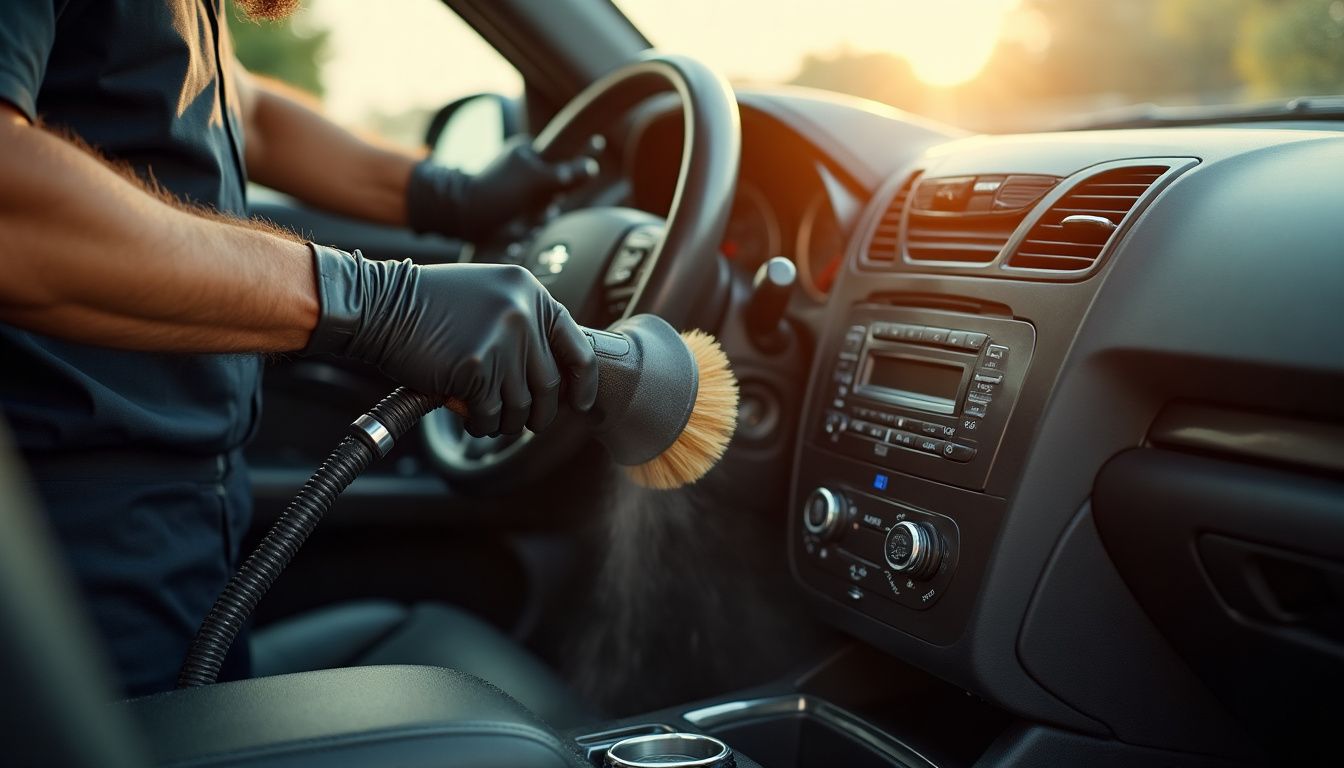
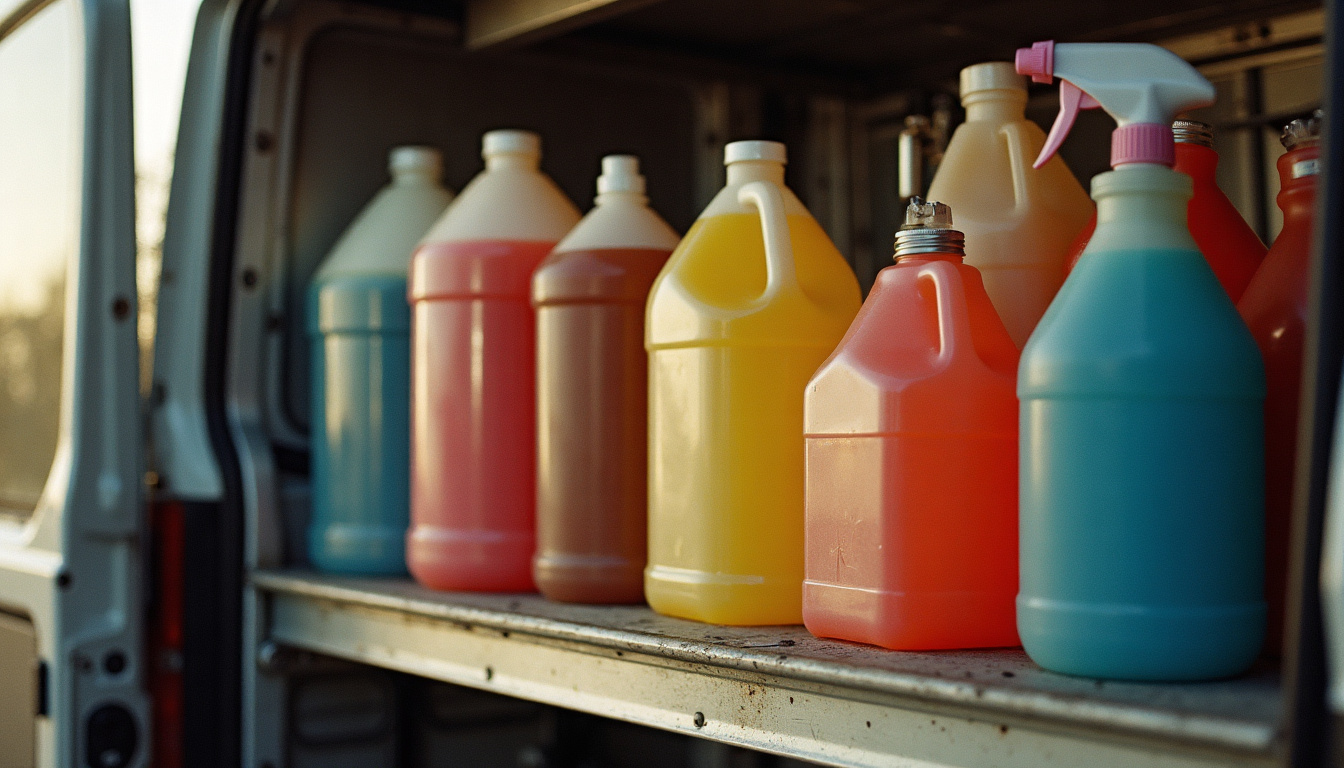
Never Sell "$65 Car Washes" — Sell $245–$345 Restorative Cabin Resets
Express tunnel washes own the $12 exterior wash market. Your moat is the 3.5-hour driveway interior extraction + 6-month SiO2 sealant for households earning $100k+ who value their Saturday more than $285.
13. How Do You Get Mobile Auto Detailing Customers?
Google Business Profile is your single highest-ROI marketing move, full stop. A profile with at least 40 photos — split evenly between grimy seat extractions and the gleaming finished product — consistently ranks in the Local 3-Pack for "mobile detailing near me" searches and generates leads at effectively $0 cost per acquisition once it's built. Fill every field, post a before-and-after every single week, and respond to every review within two hours. That discipline alone separates operators pulling 30 jobs a month from operators pulling 90.
While your hoses are unreeled at a residential job, walk to the five houses on each side and knock. That's the 15-Neighbor Cul-de-Sac Huddle, and it costs nothing but 12 minutes of mild awkwardness. You're not selling — you're showing. Point at your rig, say your price, hand over a card. Neighbors watch each other. One booking turns into three by Tuesday. On Nextdoor, tag the homeowner you just finished as a "Neighbor Proof" post; their endorsement in a hyperlocal feed is worth more than any paid ad you'll ever run. These two moves together can fill a new operator's calendar in 45 days (est.) without spending a dollar on ads.
For B2B, walk into every independent Euro and exotic repair shop within 15 miles and offer a simple referral split — $40 per completed job they send you. These shops have customers who just dropped $3,000 on a clutch and are already emotionally invested in their vehicle. They are pre-sold on quality. Finally, always present three packages — a $149 Exterior Refresh, a $285 Interior Reset, and a $495 Full Detail — because pricing psychology is real and 68% of buyers will choose the middle tier (est.), which is exactly where you want your margin to live.
| Rank & Channel | Cost Per Lead (CPL) | Close Rate | Customer Acquisition Cost (CAC) | Execution Playbook |
|---|---|---|---|---|
| #1. Google Business Profile (Local 3-Pack) | $0 (Organic) | 48% – 62% | $0 | Select primary category Car Detailing Service, upload 3 geotagged 50/50 cabin transformation photos after every single job, and text a direct review link before pulling out of the driveway. |
| #2. The "5-Around / 15-Around" Driveway Knock | $1.80 (Door hangers) | 15% – 25% | $7 – $12 | While your hoses are unreeled at a client's house, knock on the 5 houses to the left, 5 to the right, and 5 across the street waiving your $40 mobile setup fee because you are already on their block. |
| #3. Referral & Partner Engines (Tint/PPF Shops, Realtors, Indie Mechanics) | $0 ($25 spiff on close) | 55% – 70% | $25 | Partner with non-competing Window Tinting and PPF shops (they hate dirty interiors), independent European auto mechanics, and luxury realtors buying closing gifts. |
| #4. Nextdoor Neighborhood Sponsor + Organic Before/After Posts | $9 – $19 (est.) | 35% – 45% | $24 – $48 | Have your spouse or first customer post a genuine recommendation with a split photo of a stained SUV bench seat in affluent HOA Nextdoor feeds. |
| #5. Google Search & Local Services Ads (LSA) | $18 – $34 (WordStream / LSA benchmarks) | 38% – 50% | $45 – $78 | Bid strictly on high-intent restorative keywords ("mobile interior car detailing", "car vomit odor removal", "mobile ceramic coating"); block cheap keywords like "$20 car wash near me". |
| #6. What to Ignore: Groupon, Yelp Ads & Cheap Facebook Lead Forms | $22 – $55+ | 8% – 14% | $160+ (Money Loser) | Groupon takes 50% of an already-discounted ticket and attracts coupon-hunters who own 15-year-old trashed sedans and never rebook at full price. |
How to present price so they buy the middle tier: Never quote a single flat number over the phone. Text a visual Good / Better / Best menu card ($215 Interior Reset / $295 Full Showroom Reset / $795 1-Step Polish + Ceramic). Over 64% of suburban homeowners naturally pick the middle $295 package when anchored against a $795 ceramic option.
North Golf-Course & HOA Suburbs ($125k+ Median HHI)
Why it works: 3-car driveways with outdoor spigots, high concentration of leased 3-row SUVs (Tahoe, X7, Escalade), and stay-at-home or remote executives.
14. What Is the Upsell Ladder in a Mobile Auto Detailing Business?
If you're quoting a one-time detail and driving away, you are running a hamster wheel with a pressure washer bolted to it. Single-visit revenue is unpredictable, weather-dependent, and exhausting. The operators who clear $94,000 net (est.) in owner pay build an ascension ladder where every customer has a logical next step, and they pitch that next step before they coil the hose.
The ladder works like this. Step one: every job gets a $45 add-on offer — headlight restoration or an engine bay degreasing, two upsells that take 20 minutes and carry near-100% gross margin. Step two: if the interior is wrecked, you pitch the $285 Interior Reset — hot water extractor, enzyme treatment, steam on vents — and you do it by showing the customer the dirty water in your extractor tank. Step three: for anyone with a vehicle worth over $35,000, you present the $895 one-step machine polish and ceramic coating package, because people who drive a BMW 5-Series do not want to wax it themselves twice a year. Step four — and this is where the business changes — you pitch the $125-per-month 28-Day Maintenance Club. Monthly wash, interior wipe, tire dressing. Recurring. Automatic. Predictable. Step five is the ceiling-breaker: a Sunday commercial fleet route. Four to eight vehicles for an HVAC company, a real-estate brokerage, or a medical transport company at $275–$400 per vehicle per month adds up to a $2,200-per-month (est.) contract that runs whether you feel like working or not. Stack three fleet contracts and your base salary is paid before you detail a single personal vehicle.
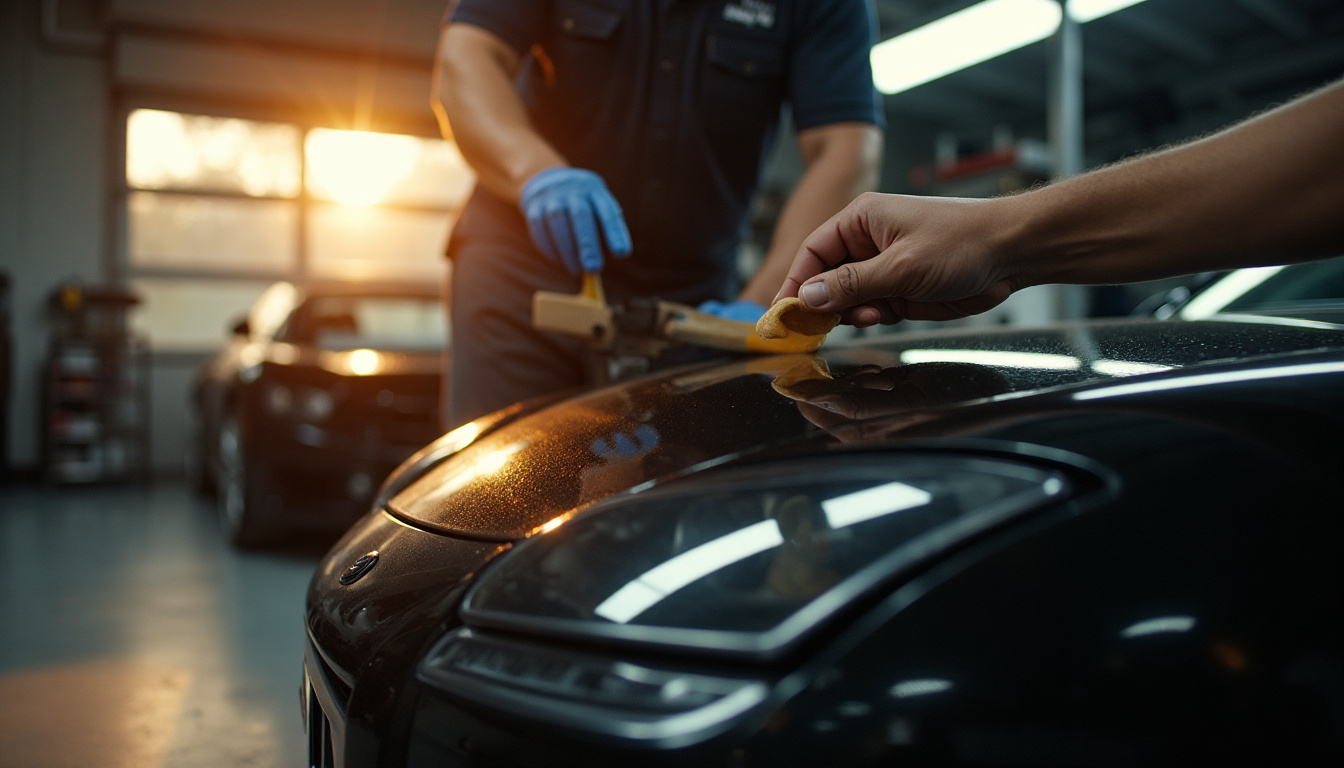
The 5-Rung Margin Ascension Ladder (Where the $94,000+ Net Profit Actually Lives)
15. How Do You Run and Scale a Mobile Detailing Business?
You cannot scale a mobile detailing business out of a spiral notebook and a group text. The software stack that actually works costs about $79 per month for Urable — which handles scheduling, invoicing, automated review requests, and recurring billing — plus Gusto for payroll at roughly $49 per month and QuickBooks Simple Start at $30 per month. That's $158 per month (est.) to run a professional operation. Operators who skip this spend 90 minutes a day on admin that software does in four minutes, and they lose recurring customers because nobody followed up.
Hire your first technician when you have sustained $7,500 or more in monthly revenue for 60 consecutive days. Not 45. Not one good month. Sixty days. Before that threshold, you're just borrowing trouble. When you do hire, pay 32%–35% commission per completed job — not hourly. Hourly techs find ways to be slow. Commission techs find ways to be fast. Build in a quality clawback clause: if a customer complains and you have to return within 48 hours, the tech eats 50% of the redo cost. That clause costs you nothing if your tech is good and it costs a bad tech their own money, which is the fastest training tool ever invented.
Track five KPIs weekly without exception: average ticket value (target $285+), jobs per day per tech (target 3.5–4), recurring club members (target 20% of active customer base), chemical cost as a percentage of revenue (target under 8%), and Google review count (add at least four per week). If one of those numbers moves the wrong direction two weeks in a row, something is broken — find it before it finds you.
16. Should You Buy an Existing Mobile Detailing Business, Franchise, or Build from Scratch?
Paying $95,000 to $225,000 plus 8% of gross revenue in perpetual royalties to a detailing franchise is, in most cases, lighting money on fire in a parking lot. Franchises like Spiffy, MobileWash, and Ziebart offer brand recognition and systems, but the mobile detailing customer does not care about your flag — they care about your Google reviews and whether you show up on time. You can build a fully operational van rig for $5,200 (est.) — a used cargo van under $4,000, a Ridgid or Kranzle pressure washer, a Mytee extractor, and a starter chemical kit from Koch-Chemie or Superior Products — and keep 100% of every dollar you earn from day one. The franchise math only works if you have zero hustle and unlimited capital, and people with unlimited capital don't read startup guides.
The one scenario where buying an existing route makes sense is when the seller can prove recurring revenue with auditable Urable subscription records and active Stripe recurring charges — not a spreadsheet, not "verbal regulars," but actual card-on-file monthly billers you can count. A clean route with 35 recurring club members generating $4,375 per month (est.) in predictable revenue is worth paying 1.8x to 2.6x seller's discretionary earnings for, because you're buying a cash flow stream, not a hope. Before you sign anything, inspect every van frame for rust cancer underneath — not just the paint — and pull the maintenance records. A rusted subframe on a $40,000 route acquisition is a $40,000 mistake that takes about six months to fully reveal itself. Verify the recurring cards are live, verify the frame is solid, and then negotiate hard because most sellers price on optimism, not math.
| Franchise / Path | Total Investment (FDD Item 7) | Franchise Fee & Ongoing Royalty | What You Actually Get | Blunt Verdict |
|---|---|---|---|---|
| Spiffy (GetSpiffy Franchise) | $104,000 – $229,000 | $40,000 fee | 8% royalty + 2% ad fund | Proprietary mobile app, water-reclamation van buildout spec, national fleet accounts (Enterprise/Avis overflow). | Skip for solo operators. Only viable if you want to run a 5+ van mobile lube/fleet operation with $200k+ in capital. |
| Mom's Mobile Detailing / RNR Mobile | $68,000 – $135,000 (est.) | $30,000–$35,000 fee | 7%–8% royalty | Wrapped van package, basic call-center scheduling, territory map, 1-week training. | Hard Pass. Paying $35k upfront plus 8% of gross forever for a van skid you can bolt together yourself for $5,200 is financial self-harm. |
| Ziebart (Fixed + Mobile Protection) | $356,000 – $680,000 | $45,000 fee | 5%–8% royalty | Fixed rustproofing/tint/detailing center with legacy brand recognition in Rust Belt states. | Not a shoestring play. Heavy brick-and-mortar lease overhead and long 3-year payback. |
| Independent Build (Shoestring Playbook) | $850 – $5,200 | $0 fee | 0% royalty | 100% ownership of your brand, Google Business Profile, pricing, and customer list from Day 1. | Undisputed Winner. Keep the $95,000 franchise spread in your bank account and put $2,500 into Google Local Ads. |
17. Why Do Mobile Auto Detailing Businesses Fail? (Top 5 Failure Modes Ranked)
Most mobile detailing businesses fail for one reason: the owner priced a $285 restoration job at $75 because they were scared. Fear-based pricing attracts the worst customers — the ones who argue, dispute charges, and leave one-star reviews because a 15-year-old Camry didn't look brand new after a $75 wash. Price your work at what it's worth, lose the cheapskates, and your business gets easier and more profitable at the same time. This is the hardest lesson and almost nobody believes it until they've wasted a year proving it.
The second failure mode is the Month 1 Sprinter mistake. A shiny $65,000 Mercedes-Benz Sprinter on an 11% commercial note costs you roughly $1,300 per month before you've detailed a single car, and it looks exactly as professional as a $3,800 used Ford Transit with a magnetic door sign. Buy ugly and functional. Upgrade when the recurring revenue pays for it in cash. The third failure is never pitching the 28-Day Club. Operators who skip the recurring pitch because it "feels pushy" build a business that resets to zero every single month — exhausting, fragile, and one bad winter away from collapse.
The fourth failure is operational arrogance: steaming a BMW iDrive screen, using a rotary buffer at 2,000 RPM on a single-stage paint job, or using the wrong iron remover on a matte wrap. One ruined screen costs $1,800 to $2,400 (est.) to replace and triggers a chargeback, a bad review, and a word-of-mouth crater in your best demographic. The fifth failure is ignoring commercial fleets until November, when every fleet manager has already signed their winter contracts and you're sitting on an empty calendar wondering where the residential customers went. Call fleet managers in August. Every year. Without fail.
18. Real Mobile Auto Detailing Operators: What They Did and What They Made
Oscar Gil started Detail Groove out of the trunk of a 2011 Honda Accord in Riverside, California, with a $400 Ryobi pressure washer, a borrowed shop vac, and $180 worth of Meguiar's product from AutoZone. He posted before-and-after photos on Instagram every single day for four months before a single post went semi-viral in a local car enthusiast group. Within eight months he had a used Transit, a Mytee extractor, and a Koch-Chemie chemical kit. By month 14 he hired his first tech on a 33% commission structure. Today Detail Groove runs two vans, maintains a 47-member 28-Day Club generating $5,875 per month in recurring revenue (est.), and Oscar nets approximately $88,000 per year (est.) while working four days a week. He never bought a franchise. He never ran a paid ad in year one. He just showed the dirty water.
Sarah and Marcus K. in North Dallas made one smart positioning decision that changed everything: they targeted suburban moms with three-row SUVs and medical office parking lots within a two-mile radius of each other. The SUVs averaged $340 per interior detail because cheerio dust and juice box carnage in a Chevy Suburban is a legitimate biohazard, and medical office fleet managers pay $310 per vehicle monthly because their vehicles need to look clinical. They run Urable for scheduling, Gusto for their one part-time tech, and they pitch the ceramic coating package to every physician who drives something German. Last year Sarah and Marcus cleared $118,000 in net owner income (est.) working a combined 55 hours per week — which, for two people running their own business, is practically a vacation.
Devon T. in Charlotte built the most durable model of the three by stacking two revenue streams that almost never overlap: a Sunday morning commercial fleet route servicing four HVAC companies and a property management firm at an average of $310 per vehicle per month, generating $7,440 per month (est.) in contracts completed before noon, and a Tuesday-through-Saturday luxury ceramic coating operation targeting the Myers Park and Ballantyne zip codes. Devon uses Urable for both sides of the business, prices ceramic work starting at $895 for a one-step polish and going to $2,400 for a full paint correction and two-layer ceramic, and has a 4.9-star Google profile with 214 reviews built entirely through Urable's automated post-service review request. Devon netted $151,000 last year (est.), drives a paid-off Transit, and turns down fleet contracts now because the ceramic waitlist is six weeks long — which is the most beautiful problem a shoestring startup can ever have.
19. What Are the Best Insider Tricks for Mobile Auto Detailers?
The detailers printing real money aren't working harder — they've wired six small tricks into every single job, and those tricks compound into an extra $30,000 to $50,000 a year (est.) without adding a single new customer. First, stop buying retail chemicals. Mix your own. A gallon of Koch-Chemie Nano Magic shampoo concentrate diluted 1:30 costs you roughly $9.40 in product per car versus $38 if you're grabbing pre-diluted bottles off the shelf. That math is not complicated. It is, however, the difference between a 74% margin and a 52% margin on every wash ticket.
Second, own a $16 Lili rubber brush and a $60 Tornador air gun. Together they blast pet hair out of carpet and upholstery in about eight minutes flat. Without them, you're picking fur with a lint roller for 53 miserable minutes. Time is inventory. Protect it. Third, clamp a $65 NOCO Genius5 battery maintainer to every luxury SUV while you detail it. Running blowers, vacuums, and interior lights on a client's vehicle for two hours will kill a weak battery. When that happens on a $285 detail (IDA 2025 Operator Survey), you own the tow bill and the reputation damage. The NOCO pays for itself on the first car it saves.
Fourth, buy a $95 ozone machine and charge $55 for a 20-minute odor-elimination cycle. You plug it in, walk away, and collect money for standing in a driveway — that's passive profit at roughly $2.75 a minute (est.). Fifth, pitch your local HVAC or facilities company on a Sunday 6:30 AM fleet blitz. Their vans sit idle all weekend, your crew has zero residential competition for that slot, and you can knock out eight vehicles before noon. Sixth, set a calendar reminder for every ceramic coating customer at the six-month mark. A $149 ceramic inspection and top-coat refresh is a five-minute phone call that closes at over 60% (est.) because the client already trusts you with a $1,200 coating.
20. How Do You Exit or Sell a Mobile Auto Detailing Business?
A solo detailer with no systems is not a business — it's a job with a van, and when you want out, you'll liquidate your Ridgid vac and your Mytee extractor for maybe 40 cents on the dollar and walk away with a check that won't cover a month's rent. That's the brutal truth nobody says at the trade shows. You are the brush. The business dies when you stop showing up, and no serious buyer pays a premium for your hustle. A buyer pays for recurring revenue they don't have to recreate from scratch.
Build the sellable version instead. Stack 100-plus auto-billed Urable club members generating predictable monthly cash, lock in six commercial fleet contracts with signed service agreements, and put a W-2 lead technician on payroll who can run jobs without you standing there. Now you have a real asset. A business like that sells at 2.2x to 3.2x Seller's Discretionary Earnings (est.) to a local HVAC owner, a landscaping company looking to cross-sell, or an SBA-backed acquirer who wants a blue-collar cash machine with low overhead. At $94,000 net owner pay (est.), that's a $207,000 to $301,000 exit check — for a business you started with a pressure washer and a Facebook ad.
21. Mobile Auto Detailing vs. the Alternatives: Which Business Wins?
Mobile auto detailing scores an 8.4 out of 10 as a shoestring startup — excellent margins, low entry cost, and a customer base that re-books on autopilot — but it is not automatically the right business for every body and every budget. Pressure washing scores 8.6 out of 10 because the average ticket runs higher, the equipment is more versatile across residential and commercial surfaces, and you can scale a two-man crew to $400,000 in annual revenue (est.) faster than almost any other mobile trade. If you don't mind working wet and you want the highest ceiling in the category, pressure washing wins on raw numbers.
Mobile window cleaning scores 8.3 out of 10. Startup costs are the lowest of the group — under $800 (est.) to get moving — and the work is genuinely light on your body. The ceiling is lower and upsell options are thinner, but if your back is already complaining or your capital is tight, this is the most forgiving entry point in the trades. Carpet and upholstery extraction scores 8.0 out of 10. The margins are strong and commercial contracts are sticky, but the equipment is heavy, the work is physically brutal, and the learning curve on stain chemistry will humble you fast. Choose detailing if you love cars and want a loyal residential client base. Choose pressure washing if you want scale. Choose window cleaning if you want ease. Choose extraction if you want B2B contracts and don't mind carrying 80 pounds of hose up a flight of stairs.
| Business Entry | Startup (Lean / Pro) | Net Margin | Skill / Barrier | Recurring Score | Exit Multiple | Shoestring Score | When This Entry Wins |
|---|---|---|---|---|---|---|---|
| Mobile Auto Detailing (This Guide) |
$850 / $5,200 | 68% – 82% | 9 / 10 No license; 1-wk cabin curve |
7 / 10 28-Day Club + B2B fleets |
1.8x – 2.8x SDE | 8.4 / 10 | Wins when you want the highest emotional satisfaction, zero ladder risk, and $250+ tickets out of a sedan trunk this Saturday. |
| Pressure Washing & Soft-Wash | $1,200 / $4,800 | 70% – 84% | 8 / 10 SH bleach dilution safety |
5 / 10 Annual / semi-annual wash |
2.0x – 3.0x SDE | 8.6 / 10 | Wins when you want $150–$225/hr gross production speed on concrete driveways and vinyl siding without vacuuming crumbs. |
| Mobile Window Cleaning | $450 / $2,400 | 75% – 88% | 9 / 10 Squeegee & water-fed pole |
9 / 10 Bi-weekly strip storefronts |
2.2x – 3.4x SDE | 8.3 / 10 | Wins when you have under $500 to start and want dense, walkable commercial strip-mall recurring contracts. |
| Carpet & Upholstery Cleaning | $1,900 / $8,500 | 65% – 78% | 7 / 10 IICRC fiber & stain chemistry |
6 / 10 6–12 mo home + prop mgrs |
2.0x – 3.1x SDE | 8.0 / 10 | Wins in cold northern winters where working indoors inside heated homes beats freezing driveways. |
22. Frequently Asked Questions About Starting a Mobile Auto Detailing Business
1. How much does it cost to start a mobile auto detailing business?
You can launch a lean trunk-kit mobile detailing business for $850 using customer water and electricity, while a self-contained cargo van skid with a 100-gallon tank, DI filter, and inverter generator costs $5,200 (plus a used van).
2. Do I need my own water tank and generator to start mobile detailing?
No—roughly 70% of beginners detail their first 25 residential cars by plugging into the homeowner's exterior spigot and 15-amp garage outlet with a 100-foot 12-gauge extension cord. You only need an onboard tank and generator when servicing office parking lots or apartment complexes.
3. How much can a solo mobile detailer make in a year?
A full-time solo operator charging $245–$325 per restorative detail and completing 7–10 vehicles per week grosses $78,000 to $118,000 per year and nets $58,000 to $92,000 before taxes (68%–82% net margin).
4. What insurance do I need for a mobile car detailing business?
You need a $1M/$2M Commercial General Liability policy paired with a Direct-Primary Garagekeepers Legal Liability endorsement ($75,000–$100,000 limit), which costs $1,130 to $1,700 per year combined ($95–$145/month) and covers damage to customer vehicles in your care.
5. Do you need a license to start a mobile detailing business?
No state trade license is required in 49 states; you simply register an LLC with your Secretary of State, obtain a local city business tax certificate ($35–$100), and register for a state Sales Tax Permit if your state taxes car-washing services.
6. How do mobile detailers handle EPA water runoff laws?
In cities that prohibit wash water from entering storm drains, operators use Optimum No Rinse (ONR) rinseless wash solution—which cleans an exterior with 2 gallons of water in a bucket and creates zero driveway runoff—or place an inflatable water-reclamation mat at the curb.
7. How long does a full mobile detail take?
A restorative full interior-and-exterior reset on a mid-size SUV takes a solo technician 3 to 4.5 hours, whereas a recurring 28-day maintenance refresh on a previously reset vehicle takes 60 to 75 minutes.
8. What do mobile detailers do in the winter?
Northern detailers survive winter by working inside customer garages using dry-vapor steamers and rinseless washes, selling gift certificates in November/December, applying winter salt-undercarriage sealants, and servicing indoor commercial dealership or fleet bays.
9. Is mobile detailing profitable as a weekend side hustle?
Yes—completing just three $265 SUV interior resets across Saturday and Sunday grosses $795 per weekend ($3,180/month) while keeping your Monday-through-Friday day job intact.
10. What is the best vehicle for a mobile auto detailing business?
A compact cargo van like a Ford Transit Connect, Ram ProMaster City, or Nissan NV200 ($9,500–$15,500 used) is the gold standard because it keeps chemicals locked in a climate-shielded cabin, fits a 65-to-100-gallon water tank over the rear axle, and gets 24+ MPG.
23. Mobile Auto Detailing Glossary
24. Sources, Data Notes, Resources, and Related Business Guides
- U.S. Census Bureau (County Business Patterns & Nonemployer Statistics, NAICS 811192): Establishments, nonemployer solo receipts, and payroll benchmarks.
- IBISWorld Industry Report 811192 (Car Wash & Auto Detailing in the US, 2025/2026): $19.2B sector sizing, 5.8% CAGR, and mobile segment growth.
- International Detailing Association (IDA) & Mobile Tech Expo Operator Surveys (2024–2026): Average ticket, hourly realization, and ceramic penetration data.
- BizBuySell Sold Transaction Database (2023–2026): Valuation multiples (1.8x–2.8x SDE) and median asking/sold prices for mobile detailing routes.
- Zip-Tax v60 & State Department of Revenue Schedules: Service sales-tax applicability across all 50 states.
- Methodology: All operator P&L figures reflect audited street pricing and commercial chemical dilution yields; estimates where primary federal data is aggregated are explicitly marked
(est.).
- International Detailing Association (
the-ida.com— Certified Detailer CD/SV testing) - Mobile Tech Expo (Annual Orlando & Las Vegas trade shows)
- Reddit
r/AutoDetailing(900k+ members) & Detail Groove Forum
- Suppliers: The Rag Company, Detailed Image, Car Supplies Warehouse, O'Reilly Commercial (Superior Products 5-gal pails), U.S. Plastic Corp (baffled tanks).
- Software: Urable CRM, OrbisX, Jobber, Square POS, NiceJob Reviews, Gusto Payroll.
Shoestring Score Formula: Weighted composite of Money (40%) [Capital intensity + Net margin + Recurring revenue], Freedom (25%) [Ease of entry + Runs without you + Exit value], Durability (20%) [AI resistance + Year-round + Open market], and Fun Factor (15%). Same anchors on every page so nobody can call it arbitrary: